Looking for the latest information on 4 10 4 Initial Value Problems? We've researched comprehensive data, records, and insights about 4 10 4 Initial Value Problems.
Core Information
Explore the main sources for 4 10 4 Initial Value Problems.
Latest News
Stay updated on 4 10 4 Initial Value Problems's newest achievements.
Second-Order Differential Equations Initial Value Problems Example 4 (KristaKingMath)
Solve the initial value problem explicitly for dA/dx = 10x^9 + 5x^4 - 2x +4 and A = 6 when x = 1
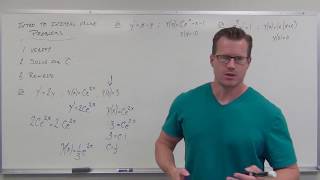
Calc1 Sec 4 10 Antiderivatives Initial Value Problems
Separable Differential Equation and initial Value Problem
Solving an Initial Value Problem with Laplace Transforms y' + 4y = e^(4t)
Separable Equations with Initial Values (Differential Equations 13)
Calc1 Sec 4 10 Antiderivatives Initial Value Problems Example2
🔵15 - Linear Differential Equations: Initial Value Problems (Solving Linear First Order ODE's)
ODE | Initial value problems for second order equations
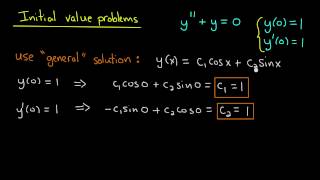
Initial value problems
Solving an initial value problem (calculus)
Expert Insights
Data is compiled from public records and verified media reports.
Last Updated: September 22, 2026
Conclusion
For 2026, 4 10 4 Initial Value Problems remains one of the most searched-for information profiles. Check back for the latest updates.
Disclaimer: Disclaimer: All information is compiled from publicly available data, media reports, and analysis. Actual details may vary.
Summary
This calculus video tutorial explains how to solve the In this IVP video, we explore how derivatives are the antiderivatives of the derivatives that come after them, namely the ... In this video we give an example of an My Differential Equations course: kristakingmath.com/differential-equations-course How to solve second-order ... In this video, I showed how to Identify the characteristics of a differential equation and how to solve an How to solve Separable Differential Equations with So now guess what now we have an In this video, we shall consider another method in solving differential Equations, we shall be looking at linear