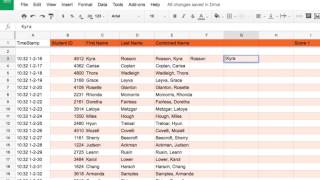
Looking for the latest information on Google Sheets Split Function? We've gathered comprehensive data, records, and insights about Google Sheets Split Function.
Main Features
Explore the primary sources for Google Sheets Split Function.
Developments
Stay updated on Google Sheets Split Function's latest milestones.
Google Sheets - Split Data into Separate Tabs (Sheets)
Google Sheets SPLIT Function Tutorial - Text to Columns Using a Delimiter, INDEX, COUNTA, IMPORTRSS
Google Sheets how to use the SPLIT function to break text apart
How to use the split function in Google Sheets (BONUS) ELIMINATING PUNCTUATION
How to Split Cells in Google Sheets
Split and Flatten Functions - Google Sheets
Splitting Data from Texts using SPLIT, LEFT, RIGHT, MID, and Text-to-Columns in Google Sheets
Unpivot in Google Sheets with FLATTEN: Column pairs, auto expand++
Google Sheets: Split text to columns to have one type of data per cell
How to Use the SPLIT Formula in Google Sheets: Easy Data Cleaning!
Google Sheets SPLIT Function Tutorial | How to Separate Data Easily (Beginner to Advanced)
Expert Insights
Data is compiled from public records and verified media reports.
Last Updated: September 20, 2026
Summary
For 2026, Google Sheets Split Function remains one of the most searched-for information profiles. Check back for the latest updates.
Disclaimer: Disclaimer: All information is compiled from publicly available data, media reports, and analysis. Actual details may vary.
Summary
The opposite of the concatenate formula which brings things together is the In this video, I'll show you how to Welcome to Geeker! If you need help with any of your IT or software questions, get on-demand help from a program or IT expert. This concise and clear video shows you how you can break text in one cell apart in to multiple cells using the Today I am going to show you two very cool formulas in This video differentiates the use of LEFT, RIGHT, and MID in Unpivoting/reverse pivoting was a game-changer when Excel introduced it with Power Query, As a general rule, each column should have only one type of data in it, and, optimally, each cell should only have one value.