Introduction of Scientific Computing 2017 Session 4
Looking for the latest information on Scientific Computing 2017 Session 4? We've gathered comprehensive data, records, and insights about Scientific Computing 2017 Session 4.
Key Details
Explore the key sources for Scientific Computing 2017 Session 4.
Developments
Stay updated on Scientific Computing 2017 Session 4's newest achievements.
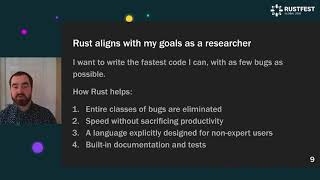
Max Orok - Considering Rust for scientific software — RustFest Global 2020
Scientific Computing 2017: Session 3
Python-based scientific computing II
Linear Algebra Libraries for High-Performance Computing at SC17
Scientific Computing 2017: Session 1
AISSAI Workshop : Machine Learning-Assisted Sampling for Scientific Computing - Day 1 - Part 1
Julia for Scientific Computing
Introduction to Julia for scientific Computing. Workshop | David P. Sanders | JuliaCon 2015
Scientific Computing 2017: Linear Algebra Review
Python-based scientific computing III
Scientific Computing 00 -- Introduction
Deep Dive
Data is compiled from public records and verified media reports.
Last Updated: September 22, 2026
Summary
For 2026, Scientific Computing 2017 Session 4 remains one of the most searched-for information profiles. Check back for the latest updates.
Disclaimer: Disclaimer: All information is compiled from publicly available data, media reports, and analysis. Actual details may vary.
Summary
This talk is about how Rust can help you write fast, correct Numbers are actually used in real Speaker: Christopher Laumann (Boston University, U.S.A.) Summer School on Collective Behaviour in Quantum Matter | (smr ... ... MC programs in HPC and high ASSAI Workshop : Machine Learning-Assisted Sampling This is an introductory course to Any advertising proceeds will be donated to the Department of Mathematics, Statistics and