Looking for the latest information on Wave Function Evolver Episode 6? We've researched comprehensive data, records, and insights about Wave Function Evolver Episode 6.
Core Information
Explore the primary sources for Wave Function Evolver Episode 6.
History
Stay updated on Wave Function Evolver Episode 6's newest achievements.
Normalizable wavefunctions and the question of time evolution
Wave Function Evolver - Episode 1
Wave Function Evolver - Episode 5
6. The Wave Function | Learn Quantum Physics
Is The Wave Function The Building Block of Reality
The Quantum Wavefunction Explained
Chapter 6: Complete Wavefunctions | CHM 309 | 068
What's a Wavefunction - in Detail Part 6: The Wavefunction
Wave Function Evolver - Episode 9
The Wave Function
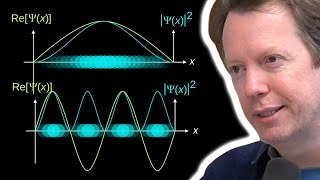
Sean Carroll: What is the Wave Function
Detailed Analysis
Data is compiled from public records and verified media reports.
Last Updated: September 20, 2026
Conclusion
For 2026, Wave Function Evolver Episode 6 remains one of the most searched-for information profiles. Check back for the newest reports.
Disclaimer: Disclaimer: All information is compiled from publicly available data, media reports, and analysis. Actual details may vary.
Summary
If you think you understand this video, you probably don't. Another adventure into the world of quantum mechanics with three ... With a few debugs and tweaks, our MIT 8.04 Quantum Physics I, Spring 2016 View the complete course: ocw.mit.edu/8-04S16 Instructor: Barton Zwiebach ... We start exploring quantum mechanics problems by implementing the Schrodinger Let's take a look at some fun potential energies! Let's Code Physics - twitter.com/LetsCodePhysics, ... A good example of how to normalize the Thank you to Wren for supporting PBS. To learn more, go to wren.co/start/spacetime Take the Space Time Fan Survey ... Fundamentally everything is made of particles and these particles are are described by a quantum So now that we've talked about the quantum numbers and we've looked at the angular part of the Our study of the Lennard-Jones potential energy produces some interesting results, and raises some interesting questions. An explanation for the general choice of